It's always fun to see birds and birdwatching promoted on sites that have a broader audience than a birder specific source. On National Public Radio Scott Simon interviewed Don and Lilian Stokes about their new bird guide. While I personally don't think of this large volume as a field guide it is done well and includes a nice CD of vocalizations.
The radio piece is about 9 minutes long and along with the interview NPR has placed a little bird quiz that asks you to match calls to pictures on it's site. I think this would be fun for beginners and especially great for kids to try.
The quiz is found here.
With winter setting in this is the time to work on learning those calls so that next spring you're ready to go.
Sunday, November 28, 2010


Monday, November 15, 2010
Banding Shorebirds in Deleware
Even though the migration is done in my area for now, I found a really good video explaining the process of catching and banding shorebirds along the ocean. This video is from out east where migrant shorebirds stop to feed on mostly horseshoe crab eggs for energy on their travels. What's really cool is the scene of the canon netting on the beach and processing the birds. Someday maybe I'll get a chance to band shorebirds!
Tuesday, November 2, 2010
Back from the IBBA
I arrived home from Ohio and the annual IBBA meeting last night. It was an experience I wish more people could have shared. It was both fun and informative. Getting to rub elbows with folks you mostly know from signature lines on e-mails is pretty cool.

Mark Shieldcastle took a group out to the BSBO banding station at Navarre on Sunday morning. I had hoped to get to see some shorebird banding but the winds off the lake didn't allow that. Instead we went onto the site of a nuclear powerplant that has a banding site on its property. With the winds I wasn't sure how banding would be but with big numbers of migrants moving up and down the lakeshore we were not disappointed.

I did get to see some birds in the hand that I've never handled. This American Woodcock was one of the earlier catches in the day. Talk about a handful for a bander!

Mark demonstrated the flexible upper bill that the woodcock uses to probe for food in the soil. This was a young "timberdoodle" and was pretty cooperative.

The local made fun of me when I got all excited about this Carolina Wren. For a guy from up north this is a pretty cool bird. I guess in Ohio it's the common wren and is not a big deal. If I saw one up here I'd put it on the birder hotline.

Had a nice close up of this Northern Flicker (yellow-shafted). It didn't behave like most of the woodpeckers I've handled in that it didn't try to drill its way out of the banders hand. Often, getting pictures of woodpeckers in the hand means somebody bleeds.

We were all heartened to see some students from Northern Michigan University at the meeting with their professor. He's going to start a banding program in the UP of Michigan and brought some interested students to the meeting for a little hands on training. We need more young folks to step into the banding world if we want to see it continue and even expand in scope. These kids were really interested and serious about getting it right. Good luck to them!
The weather here at home might allow some banding this week if I can find the time, otherwise it is getting close to the end of our season in the field and we will do out winter banding around feeder stations. Maybe my backyard will give up a good bird or two yet this fall.
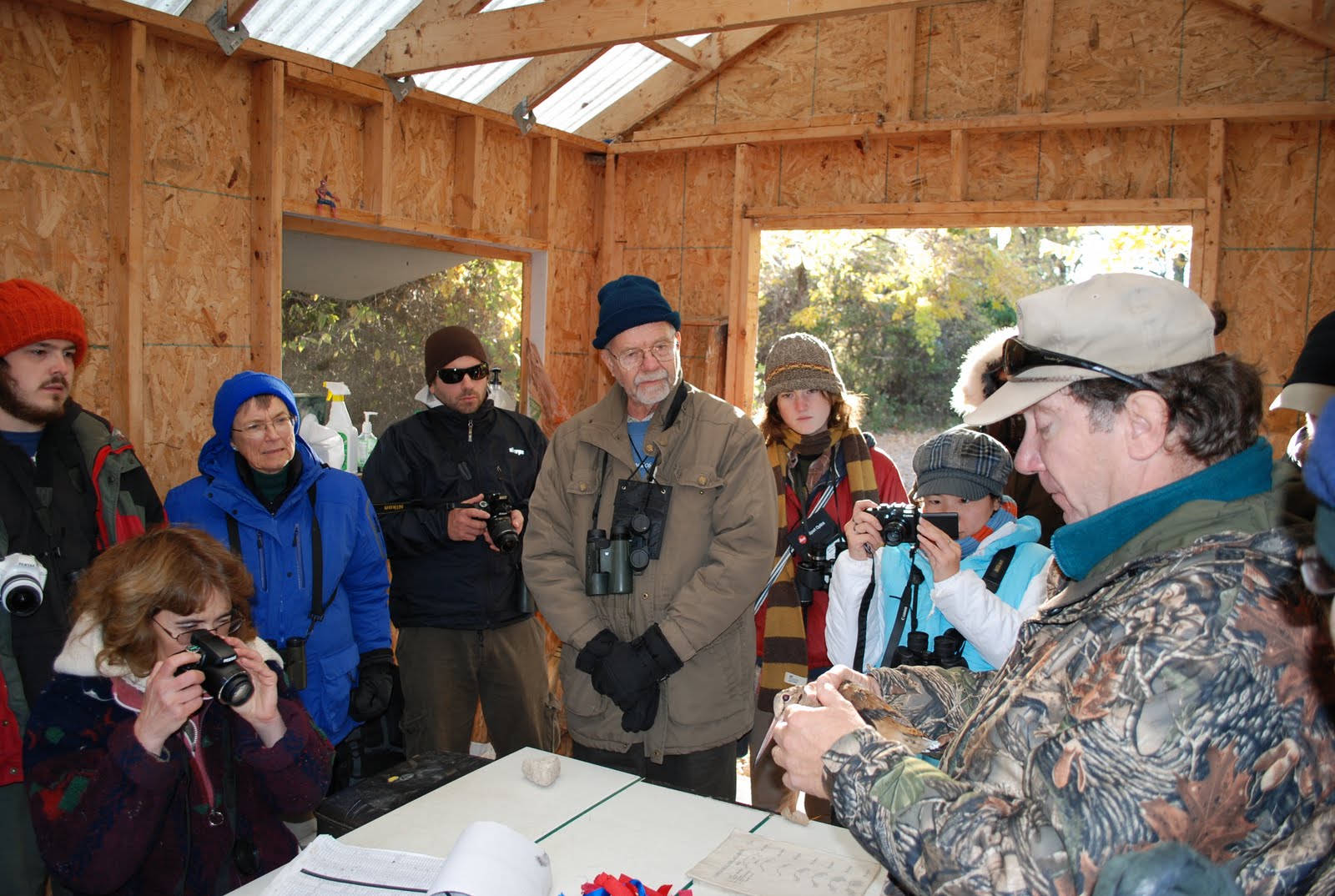
Mark Shieldcastle took a group out to the BSBO banding station at Navarre on Sunday morning. I had hoped to get to see some shorebird banding but the winds off the lake didn't allow that. Instead we went onto the site of a nuclear powerplant that has a banding site on its property. With the winds I wasn't sure how banding would be but with big numbers of migrants moving up and down the lakeshore we were not disappointed.

I did get to see some birds in the hand that I've never handled. This American Woodcock was one of the earlier catches in the day. Talk about a handful for a bander!

Mark demonstrated the flexible upper bill that the woodcock uses to probe for food in the soil. This was a young "timberdoodle" and was pretty cooperative.

The local made fun of me when I got all excited about this Carolina Wren. For a guy from up north this is a pretty cool bird. I guess in Ohio it's the common wren and is not a big deal. If I saw one up here I'd put it on the birder hotline.

Had a nice close up of this Northern Flicker (yellow-shafted). It didn't behave like most of the woodpeckers I've handled in that it didn't try to drill its way out of the banders hand. Often, getting pictures of woodpeckers in the hand means somebody bleeds.

We were all heartened to see some students from Northern Michigan University at the meeting with their professor. He's going to start a banding program in the UP of Michigan and brought some interested students to the meeting for a little hands on training. We need more young folks to step into the banding world if we want to see it continue and even expand in scope. These kids were really interested and serious about getting it right. Good luck to them!
The weather here at home might allow some banding this week if I can find the time, otherwise it is getting close to the end of our season in the field and we will do out winter banding around feeder stations. Maybe my backyard will give up a good bird or two yet this fall.
Subscribe to:
Posts (Atom)